Time to Talk Designer Babies New Scientist
Displaying 1 - 20 of 21 articles
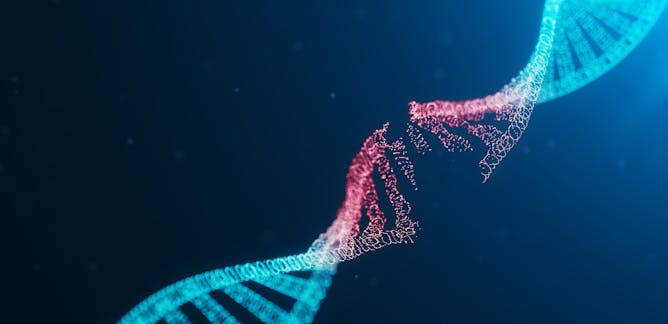
The achievement didn't live up to the hype, but it has illuminated new areas of 'genetic dark matter'.

CRISPR isn't a tool to fix social problems.

The debate about gene editing will help shape the future of the human race. But how should the discussion get started?

Ideas from economics might help us decide the most ethical way of using gene editing technology for human enhancement in the future.

It's now possible to choose embryos for IVF based on the likelihood they will have certain traits.

A Russian scientist is preparing to do germline gene editing. Here's why that's a problem.

Genome editing technology has, and will always have, limits. Limits that are related not to the technology itself but to the intrinsic complexity of the human genome.

Chinese researcher He Jiankui told a spellbound audience how he created gene-edited babies. With a couple of revealing slides, we can see what he did and speculate what health problems might ensue.

Chinese researcher, Jainkui He claims to have created the world's first genome-edited twins. Such action would pose unknown risks to the lives of these children and to humanity as a whole.

A Chinese scientist has revealed he edited the DNA of twin girls born through in vitro fertilization. These girls are designed to be resistant to HIV. Is the edit a medical necessity or an enhancement?

A Chinese scientist claims to have edited human DNA to make us more resistant to HIV. Here's why that's not good news.

Academics from different disciplines come Head to Head in this series to tackle topical debates.

A landmark study in the UK discovered the gene that allows cells to form into embryos. If Australian researchers attempted this they could go to jail for 15 years.
The news may have come as a surprise, but it probably shouldn't have. A bioethics expert walks through how big a deal this announcement is – and what we should be considering now.

Government support for infertility treatment is approximately A$240 million a year. The question of whether it's worth it is a complex one.

As we consider the ethics of human gene editing, we need to understand what can and can't be meaningfully edited.

Since science made it possible to research manipulating the cells that are linked to reproduction, the naysayers have carried the day. But how solid are their objections really?

A breakthrough in genetic of the human embryo raises the question of whether we want to create designer babies with greater athletic abilities.

The first case of genetically engineering a human embryo to cure a congenital disease is a technical breakthrough but raises troubling ethical questions.

Far from creating designer babies, three-parent IVF is about allowing women who carry genetic diseases in their mitochondria to avoid passing them on to their children. The process involves replacing the…
Time to Talk Designer Babies New Scientist
Source: https://theconversation.com/global/topics/designer-babies-6339
0 Response to "Time to Talk Designer Babies New Scientist"
Post a Comment